How Is Indian Single Malt Whisky Made? A Complete Guide to Its Production Process
Whisky enthusiasts appreciate this type of whisky for its unique flavour and production process. Still, there are a lot of questions about the production of such an unusual and exquisite whisky. The special production technique gives this whisky its distinctive character. From choosing high-quality barley through malting, fermentation, distillation, and aging, all the stages are responsible for the character of this drink. The experience of the distillers and the type of oak casks also play a role in its taste and aroma. To understand how single malt whisky is made, it is necessary to take a look at all the stages of production and not only at distillation. Each of them has a specific function, even minor details may affect the final product.
In this article, we will discuss the whole production process of Indian single malt whisky, the significance of the traditional technique, and the influence of Indian climate on whisky aging.
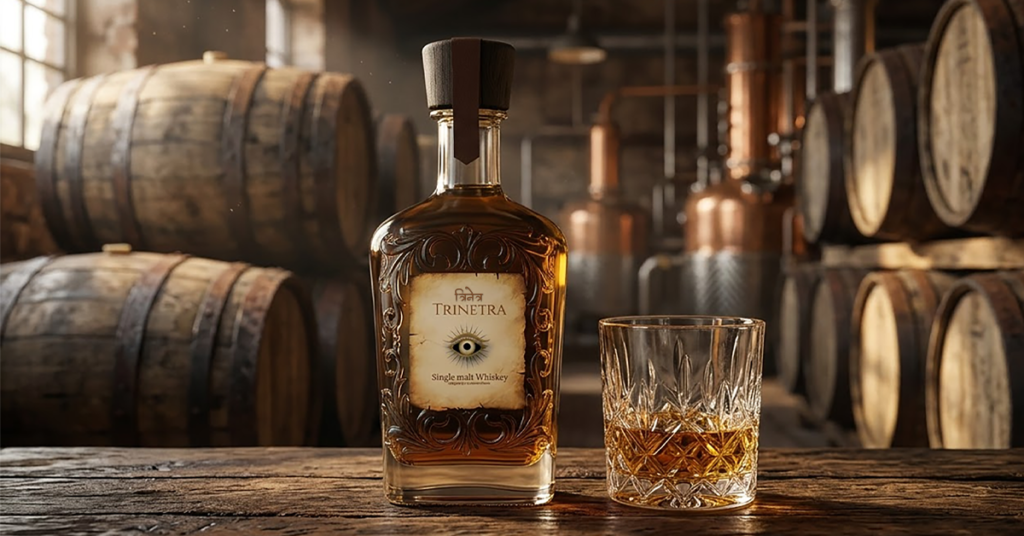
What Makes Indian Single Malt Whisky Different?
Therefore, Before exploring the production process, we must understand what single malt whisky means.
The Food Safety and Standards Authority of India (FSSAI) defines single malt whisky as whisky made from malted barley without adding other cereals; it is distilled in pot stills and produced at one distillery.
The term single malt describes the grain type and the distillery that produces the whisky. Single malt does not mean that it has been produced in one barrel or even in one batch.
In addition, single malts of India are distinctive because of the specific conditions of the production in this country. Factors such as temperature, water, production methods and cask selection can influence the whisky’s development.
Nevertheless, single malt whiskies of India combine the traditions of the production of this beverage with some peculiarities of the process chosen by the distilleries.
How Is Single Malt Whisky Made? The Complete Production Process
Whisky production involves several interconnected stages. While different distilleries use different technologies and machinery, the general process is always carried out following the following steps:
1. Choosing the Right Barley
In the first place, the distillery chooses appropriate barley for whisky production. This ingredient is important since it contains starch which will be converted into fermentable sugar.
The distillery evaluates each grain’s quality, moisture, consistency and malting suitability before selecting the barley.
Additionally, choosing the right barley provides a solid base for the entire production process. The distillery examines grain before the malting process starts.
2. Malting: Preparation of Barley to Make Whisky
One of the most critical stages in single malt production is malting. During this stage, the distillery allows the barley grains to germinate under controlled conditions.
In the first step, the grains are soaked in water to ensure that they take moisture and germinate.
Secondly, enzymes are developed in the grains to facilitate the breakdown of starch to simpler compounds. The enzymes help convert starch into fermentable sugars.
But the germination process should be regulated since, once it is at the right stage, the producer should dry the grains in a kiln.
Some distilleries dry the malted barley over peat smoke, although others avoid this method.
3. Mashing: Extraction of Fermentable Sugars
Following malting, the distillery transports the dried barley to a mill and crushes it into a coarse material called grist.
The distillery then mixes the grist with hot water in a vessel called the mash tun. During mashing, enzymes break down starch and produce fermentable sugars.
At this stage, the distillery calls the extracted liquid wort and separates it from the remaining solid material.
This step is important because Yeast uses fermentable sugars to produce alcohol during the next stage.
4. Fermentation: Sugar to Alcohol
Fermentation takes place to convert the sugar content in wort into alcohol. First of all, The distillery cools the wort and transfers it to fermentation tanks, also known as washbacks.
Then, yeast is added. Yeast ferments the fermentable sugars in the form of alcohol and CO2.
Fermentation conditions influence the liquid’s final characteristics. For example, different types of yeast, temperature, and fermentation time could influence such flavors as fruitiness or floralness.
Finally, fermentation results in a product known as the wash, and the alcohol content in it stays rather low as compared to alcohol content in the resulting whisky spirit.
In addition, Fermentation creates several flavour precursors. Thus, choices made during this process determine the spirit produced in distillation.
5. Distillation in Pot Still: Increase in Concentration of Spirit
Distillation separates alcohol from other volatile compounds in the fermented liquid. FSSAI’s definition requires Indian single malt whisky producers to use pot still distillation.
During the first stage, the distillery heats the wash in the pot still. Heating the wash releases alcohol vapour and other volatile compounds.
The vapour then enters a condenser, where cooling turns it back into liquid.
While the distillation process is ongoing, distillers monitor it and select different parts of the spirit. Distillers usually divide these portions into three categories: heads, hearts and tails.
Distillers select the heart cut for further maturation. Nonetheless, Each distillery selects the heart cut according to its production style and preferences.
Copper pot stills are also significant. Copper reacts with some sulfur compounds while distilling and helps distillers control spirit aroma and character.
Therefore, pot still construction, heating methods, rate of distillation and spirit cuts all influence character.
The Importance of Oak Cask Maturation
Once distillation ends, the distillery begins maturing the spirit. During maturation, The spirit develops its colour, aroma and flavour as it interacts with the oak cask.
The selection of appropriate casks depends on the style of whisky. For instance, oak casks give the flavour of vanilla, spices, dried fruits, caramel, and oak itself.
In addition, the spirit undergoes interaction with the oak cask. The oak may have its own characteristics; the atmosphere inside the cask may influence the maturation process.
India’s warmer climate makes this stage distinctive because many Indian whisky-producing regions experience higher temperatures than Scotland. Thus, temperature variation affects the interaction of spirit and oak.
Nevertheless, the maturation process is not only connected with temperature. Such factors as size of the cask, types of oak, the usage of casks before, the condition of warehouse, and the features of the spirit should be taken into account as well.
The duration of this stage does not affect the quality of the product positively. On the contrary, distillers control the progress of the spirit.
Quality Checks, Marrying and Bottling
Quality control should be exercised even after maturation in order to ensure the spirit is bottled with the correct quality. Whisky producers check the spirit’s aroma, taste, colour and consistency before bottling.
Moreover, the producers can also blend various selected barrels of the same distillery to ensure a characteristic profile of their products. Whisky producers call this practice marrying or vatting.
Blending does not change the whisky’s single malt status because it still meets the required single malt criteria. That is, The distillery produces the spirit using the required ingredients and pot still distillation.
Prior to bottling, the producer may dilute the whisky to the desired level with appropriate water. Moreover, The producer checks the final product’s quality and ensures that its label meets applicable requirements.
Finally, the producer bottles and seals the whisky before preparing it for the market.
Indian Climate, Whisky Flavour and the Trinetra Perspective
India’s distinct climate and temperature conditions create a unique environment for whisky production. They offer a specific challenge to the process of distillation.
For instance, warm warehouse temperature influences the interaction of spirits with oak. However, it is a very complex process that depends on many conditions like moisture, casks used, etc.
In addition, Indian distillers have the option of creating different flavors depending on the choice of barley and yeast used for fermentation, pot stills’ design and casks used.
Thus, all the knowledge and conditions used by Indian distillers during production help to form the specific identity of Indian single malt whisky.
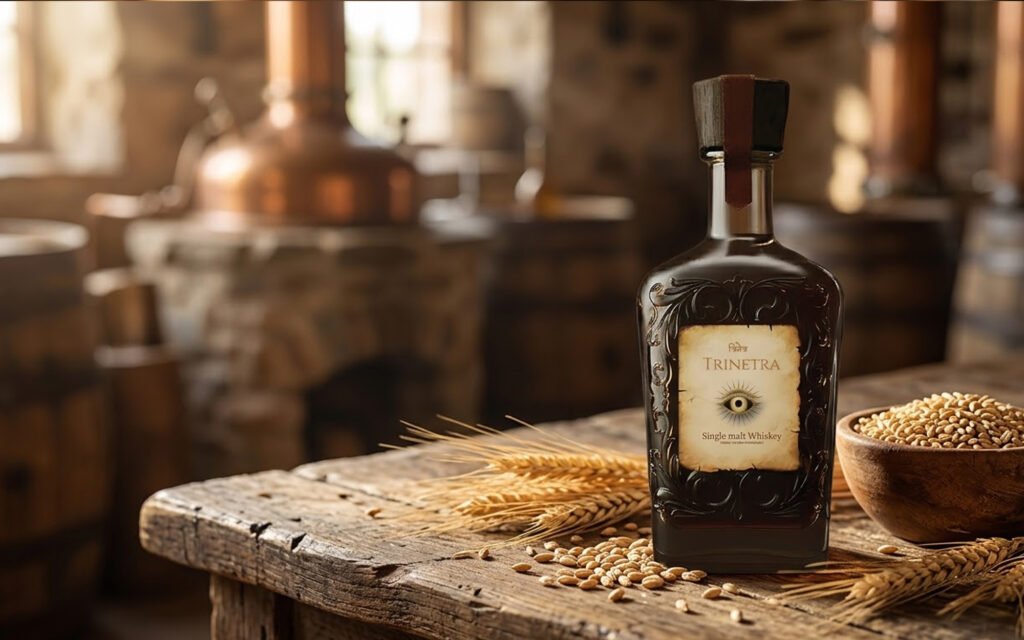
I take a special interest in the whisky production process, especially the production of Indian single malt whisky. Trinetra Whisky explores this production process in detail, and it gives me an opportunity to research the production process of this whisky type.
Moreover, it is possible to learn the role of different raw materials and methods used during distillation and maturation when analyzing the character of a single malt.
Frequently Asked Questions About Single Malt Whisky
1. What is single malt whisky made of?
First, single malt whisky is made of malted barley. In particular, manufacturers soak and germinate the barley and dry it. Then, they mill the malt, mix it with water and ferment the obtained wort by means of yeast and distill it in pot stills. Producers then mature and bottle the selected spirit.
2. Does Indian single malt whisky include other ingredients?
No. According to the FSSAI definition, Indian single malt whisky includes malted barley without other grains. Besides, the spirit should be made using pot still distillation and made at one distillery.
3. How will the weather in India affect the production of Single Malt Whisky?
India’s weather conditions may influence the interaction between the whisky and the oak barrel during the maturation process. In fact, for example, Higher temperatures may accelerate certain aspects of the maturation process. However, there are other factors which must be considered.
4. What makes single malt whisky production unique in comparison with blended whisky?
Single malt whisky is made in one distillery using malted barley and pot distillation technique. Blended whisky comprises various components depending on the classification and way of production of this drink. Hence, single malt whisky differs from blended whisky in its ingredients and way of production.
5. Is old single malt whisky always superior?
Not always. The age of the drink is not always a guarantee of high-quality. Rather cask quality, conditions of maturation, spirit characteristics and decisions made by distillers play role here. Matured properly, the whisky is more important than the increase of its age.
Conclusion
Indian single malt whisky brings together carefully selected raw materials, production expertise, distillation techniques and maturation methods. Every step from the selection of barley till bottling influences the final product.
Understanding how single malt whisky is made highlights the expertise and craftsmanship behind this spirit. Additionally, it helps readers understand how Indian single malts develop their identity through production and maturation.
Learn more about the world of Indian single malt whisky at Trinetra Whisky.